24 Aug 2026
The Hidden Links Between Payment Options and Responsible Play in Swiss-Regulated Roulette Games

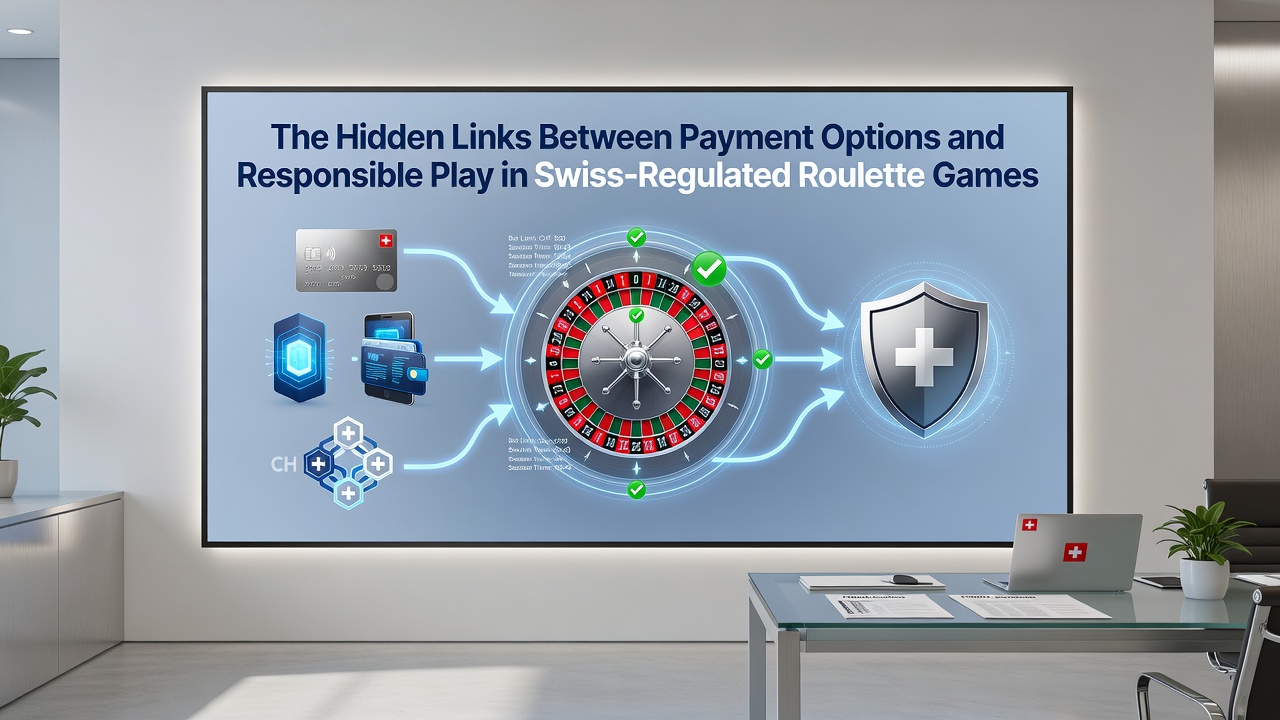
Swiss-regulated roulette operates under strict oversight that ties payment mechanisms directly to player protection measures, creating connections that extend beyond simple deposits and withdrawals. Payment options such as bank transfers, e-wallets, and prepaid cards interact with responsible gambling tools through built-in limits, transaction delays, and monitoring protocols enforced by Swiss authorities. These links become evident when examining how different methods either support or challenge self-imposed spending boundaries in online and land-based roulette environments licensed within Switzerland.
Payment Methods Shape Deposit Controls
Bank transfers often enforce a built-in cooling period that aligns with Swiss responsible play requirements, since funds move through traditional financial channels with verification steps that take one to three business days. This delay gives players time to reconsider large transfers before they reach the roulette platform, a feature that Swiss regulators incorporate into licensing conditions for operators. E-wallets, by contrast, enable near-instant deposits that bypass some of those natural pauses, which prompts Swiss-regulated sites to layer additional verification or temporary caps on these faster methods to maintain compliance with player protection standards.
Data from Swiss federal gaming oversight bodies shows that operators must integrate real-time balance checks with payment processing systems, ensuring that deposit limits set by the player remain active across all accepted methods. Prepaid cards add another layer because they restrict spending to preloaded amounts, reducing the risk of overspending during extended roulette sessions. Observers note that these mechanical differences in payment speed and verification create measurable effects on how players manage their roulette activity under Swiss rules.
Transaction Monitoring and Early Intervention
Swiss regulations require operators to monitor payment patterns for indicators of problematic play, such as rapid successive deposits or attempts to exceed self-set limits. When a player uses multiple payment methods in quick succession, the system flags the activity and may trigger a responsible play intervention, including temporary account restrictions or prompts to review spending history. This monitoring applies uniformly to roulette games offered by licensed Swiss entities, regardless of whether the player chooses a domestic bank transfer or an international e-wallet service approved for use in Switzerland.
Research conducted through academic partnerships with Swiss institutions has documented correlations between payment velocity and session length in regulated roulette environments. Slower methods correlate with shorter average play periods, while instant options require stronger algorithmic safeguards to achieve similar protective outcomes. These findings feed into ongoing refinements of Swiss licensing criteria, particularly as operators prepare for expanded digital payment frameworks scheduled for implementation reviews in August 2026.
Regulatory Integration Across Payment Channels
The Swiss Federal Office of Justice coordinates with financial regulators to ensure that approved payment providers for roulette platforms adhere to the same responsible gambling standards applied to the operators themselves. This coordination means that certain high-velocity payment services face additional scrutiny or exclusion if they cannot support mandatory limit-setting features. Players encounter these rules when setting up accounts, as Swiss platforms must offer uniform tools for deposit caps, time limits, and self-exclusion regardless of the chosen funding method.
International comparisons reveal similar patterns in other regulated markets, such as those documented in reports from the Australian Gambling Research Centre and analyses issued by Canadian provincial gaming authorities. Swiss approaches stand out for their emphasis on linking payment verification directly to national identification systems, which strengthens the enforcement of individual responsible play agreements. One study from a European research consortium found that jurisdictions with tight payment-responsible play linkages report lower rates of disputed transactions linked to excessive roulette play.
Future Adjustments and August 2026 Developments
Updates planned for August 2026 focus on standardizing API connections between payment processors and Swiss roulette platforms to improve real-time limit enforcement. These changes aim to close gaps where players might switch between methods to circumvent caps, a practice that current monitoring already identifies but will address through enhanced interoperability requirements. Licensed operators must demonstrate compliance with these new protocols during their annual reviews, ensuring that responsible play remains embedded in every payment flow.
Payment providers seeking Swiss approval undergo testing that evaluates their capacity to enforce pauses, block transactions exceeding player limits, and report aggregated data on usage patterns without compromising individual privacy. This process reinforces the structural connection between how funds move into roulette accounts and the safeguards designed to keep play within controlled boundaries.
Conclusion
Swiss-regulated roulette demonstrates clear structural ties between payment options and responsible play through mandatory limit integration, transaction monitoring, and coordinated regulatory oversight. These connections operate consistently across bank transfers, e-wallets, and prepaid solutions, with ongoing refinements scheduled for August 2026 to strengthen enforcement. Data from Swiss authorities and aligned international research supports the effectiveness of embedding protection mechanisms directly into payment processing, creating a framework where financial mechanics actively support player control rather than operating separately from it.